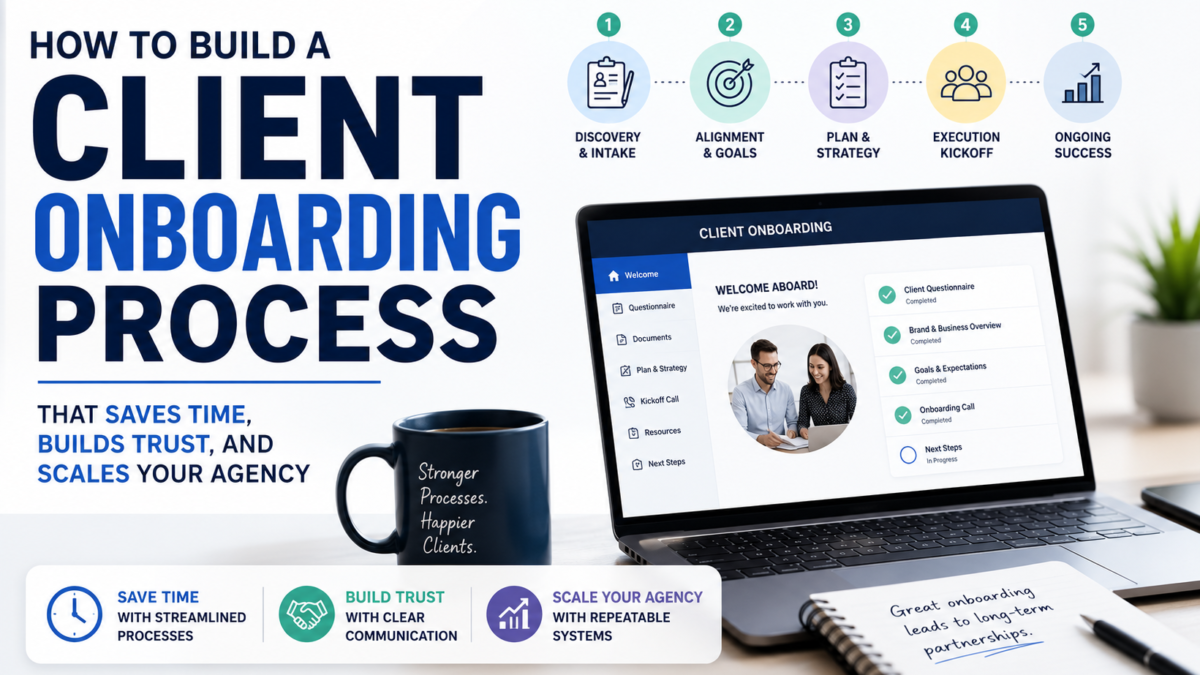
Winning a new client is an exciting milestone, but it’s only the beginning of the relationship. The experience clients have during their first few days often shapes how they perceive your agency for months or even years to come.
A disorganized onboarding process can quickly create frustration. Missing documents, repeated questions, unclear timelines, and scattered communication make clients question whether they made the right decision. On the other hand, a structured onboarding process creates confidence, establishes clear expectations, and allows your team to start delivering value sooner.
As agencies grow, relying on emails, spreadsheets, and manual checklists becomes increasingly difficult. Standardizing onboarding not only saves time but also reduces operational errors and improves the overall client experience.
Whether you run an SEO agency, web design studio, digital marketing company, or creative agency, investing in a well-designed client onboarding process is one of the most effective ways to improve efficiency while building stronger client relationships.
What Is a Client Onboarding Process?
A client onboarding process is the structured sequence of steps that guides a new client from signing an agreement to becoming an active customer.
Rather than collecting information through scattered emails or multiple phone calls, agencies use a standardized workflow to gather everything needed before work begins.
An effective onboarding process typically includes:
- Welcome communication
- Client intake forms
- Contract confirmation
- Goal discovery
- Access requests
- Project timelines
- Team introductions
- Communication preferences
- Initial deliverables
- Kickoff meeting
By following a consistent process, agencies reduce confusion while ensuring every client receives the same professional experience.
Why Client Onboarding Matters More Than Most Agencies Realize
Many agency owners focus heavily on lead generation and sales, but overlook what happens after a client signs the contract.
Poor onboarding creates problems that often continue throughout the entire engagement.
Common challenges include:
Missing Project Information
Without standardized data collection, teams frequently spend days requesting information that should have been gathered from the beginning.
Examples include:
- Website credentials
- Brand assets
- Marketing goals
- Existing analytics access
- Hosting information
- Social media accounts
- Previous campaign data
Each delay slows project delivery and increases administrative work.
Inconsistent Client Experiences
When every account manager follows a different onboarding process, clients receive inconsistent service.
Some clients receive detailed instructions.
Others receive minimal guidance.
Standardized onboarding creates consistency regardless of which team member manages the account.
Delayed Project Delivery
Projects often stall because agencies wait for missing information before beginning work.
Clear onboarding workflows identify required documents, approvals, and access requests early, allowing projects to move forward without unnecessary delays.
The Business Benefits of a Standardized Onboarding Process
A well-designed onboarding system improves far more than operational efficiency.
Builds Trust Immediately
Clients want reassurance that they’ve chosen the right agency.
Receiving a structured welcome experience demonstrates professionalism and organization from day one.
Clear communication, defined timelines, and transparent expectations reduce uncertainty while strengthening confidence in your team.
Saves Valuable Time
Without standardized workflows, agency employees repeatedly answer the same questions, request identical documents, and recreate onboarding materials for every new client.
Automation and standardized processes eliminate much of this repetitive work.
The result is more time spent delivering services rather than managing administration.
Improves Team Collaboration
Successful onboarding requires input from multiple departments.
Sales teams transfer information.
Project managers schedule work.
Designers collect brand assets.
SEO specialists request website access.
Finance confirms billing.
Keeping these activities organized within a centralized workflow helps departments collaborate more efficiently while reducing communication gaps.
The Essential Components of an Effective Client Onboarding Process
Although every agency operates differently, high-performing onboarding systems typically include several core elements.
1. Welcome and Expectations
Start by introducing your agency’s process.
Explain:
- Project phases
- Communication channels
- Response times
- Team contacts
- Expected timelines
Setting expectations early reduces misunderstandings later.
2. Client Intake Forms
Collecting information through structured intake forms is significantly more efficient than requesting details through multiple email conversations.
Well-designed intake forms help agencies gather:
- Business information
- Marketing objectives
- Target audience
- Brand guidelines
- Website access
- Technical requirements
- File uploads
- Project priorities
Using standardized digital forms also improves data accuracy while ensuring every project begins with complete information.
For agencies managing multiple clients, implementing customizable digital intake forms can simplify onboarding, reduce repetitive administrative work, and create a more consistent client experience by collecting essential information through one organized workflow instead of scattered email exchanges.
Part 2 will complete the article with:
- Client onboarding checklist
- Common onboarding mistakes
- Automation best practices
- Comparison table
- Key takeaways
- SEO/AEO FAQs
- Strong EEAT conclusion
- Natural contextual opportunities for DSP CRM’s Forms Builder, Client Portal, and CRM.
3. Create a Clear Project Roadmap
Once you’ve collected the necessary information, provide clients with a roadmap that explains what happens next.
A simple onboarding roadmap should answer questions such as:
- What are the first project milestones?
- Who is responsible for each task?
- When will the first deliverables be shared?
- How often will progress be reported?
- Which communication channels will be used?
A documented roadmap eliminates uncertainty and gives clients confidence that the project is moving in the right direction.
4. Centralize Communication
One of the biggest onboarding mistakes agencies make is spreading communication across multiple channels.
A client sends project files by email.
Feedback arrives in a messaging app.
Approvals happen during video meetings.
Contracts are stored in cloud storage.
When information is fragmented, both clients and internal teams waste time searching for answers.
Centralizing communication creates a single source of truth where project discussions, documents, updates, and approvals remain organized throughout the client lifecycle.
5. Automate Repetitive Tasks
Not every onboarding task requires manual effort.
Many repetitive activities can be standardized, including:
- Welcome emails
- Client questionnaires
- File requests
- Reminder notifications
- Task assignments
- Kickoff meeting scheduling
- Internal team notifications
Automation reduces administrative workload while ensuring every new client receives the same high-quality onboarding experience.
Common Client Onboarding Mistakes
Even experienced agencies sometimes overlook simple improvements that significantly affect client satisfaction.
Avoid these common mistakes:
- Starting work before collecting complete project information.
- Requesting the same information multiple times.
- Using inconsistent onboarding processes across team members.
- Relying entirely on long email threads.
- Failing to communicate timelines and responsibilities.
- Not documenting client approvals.
- Overcomplicating the onboarding experience with unnecessary forms or steps.
A streamlined process should make onboarding easier not more complicated.
Manual Onboarding vs. Standardized Onboarding
| Process | Manual Onboarding | Standardized Onboarding |
| Information Collection | Multiple emails | Structured intake forms |
| Client Communication | Scattered | Centralized workflow |
| Team Collaboration | Inconsistent | Shared process |
| Project Kickoff | Frequently delayed | Faster and more predictable |
| Data Accuracy | Higher risk of missing information | More complete and consistent |
| Client Experience | Varies between team members | Consistent and professional |
| Scalability | Difficult as the agency grows | Designed to support growth |
As agencies increase their client volume, standardized onboarding becomes a competitive advantage rather than simply an operational improvement.
Best Practices for Scaling Client Onboarding
As your agency grows, focus on continuous improvement instead of treating onboarding as a one-time process.
Consider these best practices:
- Review your onboarding checklist every quarter.
- Remove unnecessary steps that create friction.
- Standardize document requests.
- Keep client forms concise and relevant.
- Train every team member on the same onboarding workflow.
- Monitor client feedback to identify improvement opportunities.
- Use automation where it reduces repetitive work without sacrificing personalization.
Small improvements in onboarding often produce long-term gains in efficiency and client satisfaction.
Frequently Asked Questions
What is a client onboarding process?
A client onboarding process is a structured workflow that helps agencies transition new clients from signed agreements to active projects by collecting information, setting expectations, and organizing communication.
Why is onboarding important for agencies?
Effective onboarding improves communication, reduces project delays, strengthens client trust, and helps teams deliver services more efficiently.
What should a client onboarding checklist include?
A checklist should cover welcome communication, intake forms, contracts, business goals, project requirements, access requests, timelines, team introductions, communication preferences, and kickoff planning.
How do intake forms improve onboarding?
Digital intake forms standardize information collection, reduce repetitive emails, improve data accuracy, and ensure project teams receive everything they need before work begins.
How can agencies automate onboarding?
Agencies can automate welcome emails, intake forms, task assignments, reminders, project creation, and internal notifications, reducing administrative work while maintaining a consistent client experience.
Conclusion
The most successful agencies understand that onboarding is more than an administrative task it’s the foundation of every client relationship.
A well-designed onboarding process reduces confusion, accelerates project delivery, improves collaboration, and demonstrates professionalism from the very first interaction. As agencies grow, standardized workflows become essential for maintaining consistent service quality across every client engagement.
Rather than relying on scattered emails, manual checklists, and disconnected tools, agencies benefit from bringing onboarding into a structured workflow. Using digital intake forms, centralized communication, and automated processes helps teams spend less time on administration and more time delivering measurable results.
For agencies looking to streamline client onboarding, solutions that combine customizable intake forms with CRM, project management, and client collaboration tools can create a more efficient workflow while supporting sustainable business growth. The right process doesn’t just save time it builds trust, strengthens client relationships, and creates the operational foundation needed to scale with confidence.